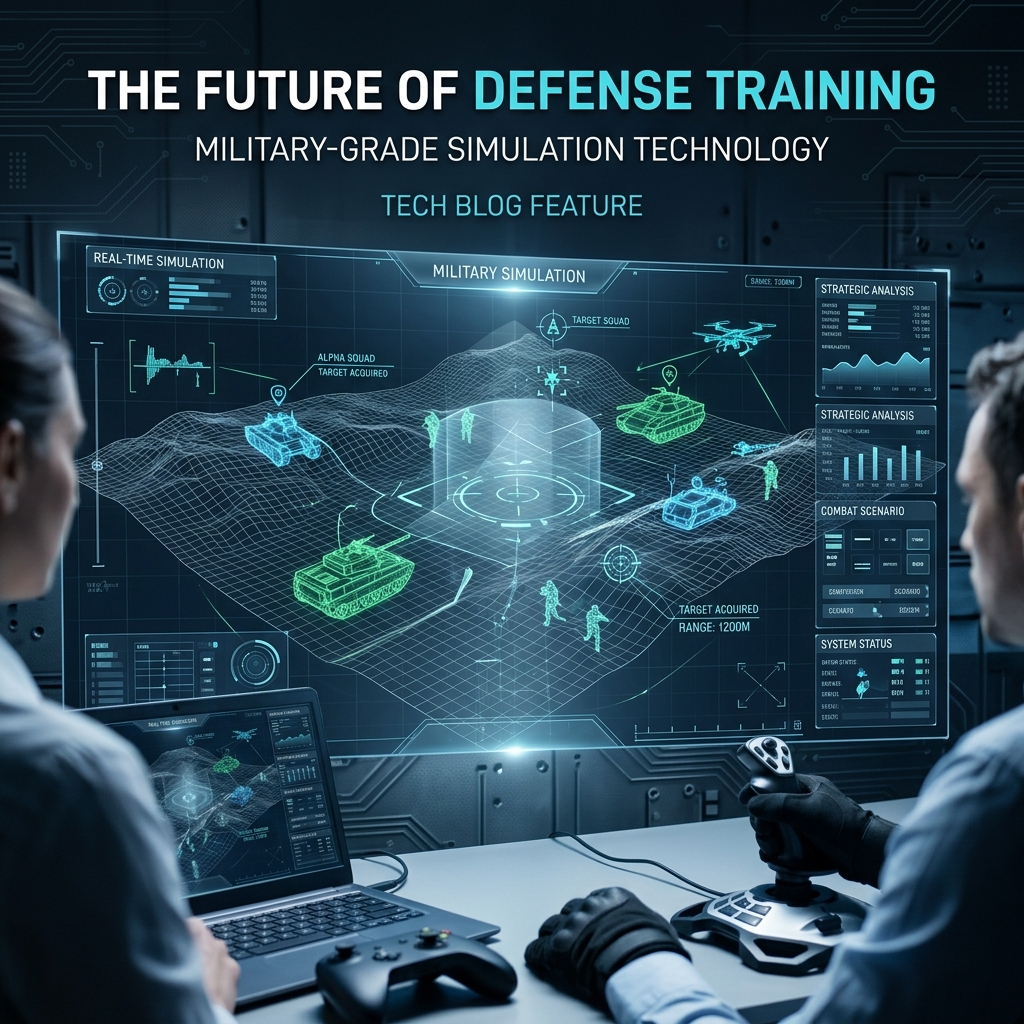
Modern defense forces require maximum strategic readiness. However, deploying submarines, tactical warships, or combat helicopters for routine training missions presents extreme operational costs, logistics issues, and hardware wear. This has driven global militaries to adopt advanced hardware-in-the-loop (HIL) simulators.
Simulating Critical Tactical Environments
Military simulation systems allow naval and air cadets to train in complex situations under zero risk. For instance, Submarine Simulators recreate hydrodynamics, underwater acoustics, and sonar responses. Trainees practice navigating deep waters and handling tactical threats in fully monitored control booths, building muscle memory and tactical preparedness.
Hardware-in-the-Loop Integration
Unlike basic desktop simulators, tactical systems require real physical components integrated with digital rendering software. When a trainee uses a flight stick or handles sonar dials, the action directly modifies mock radar feedback and telemetry arrays. This precise hardware integration produces realistic training outputs, equipping operators for complex actual deployments.
Interested in Simulator Systems?
Request technical architecture proposals or scheduling information from our defense team.