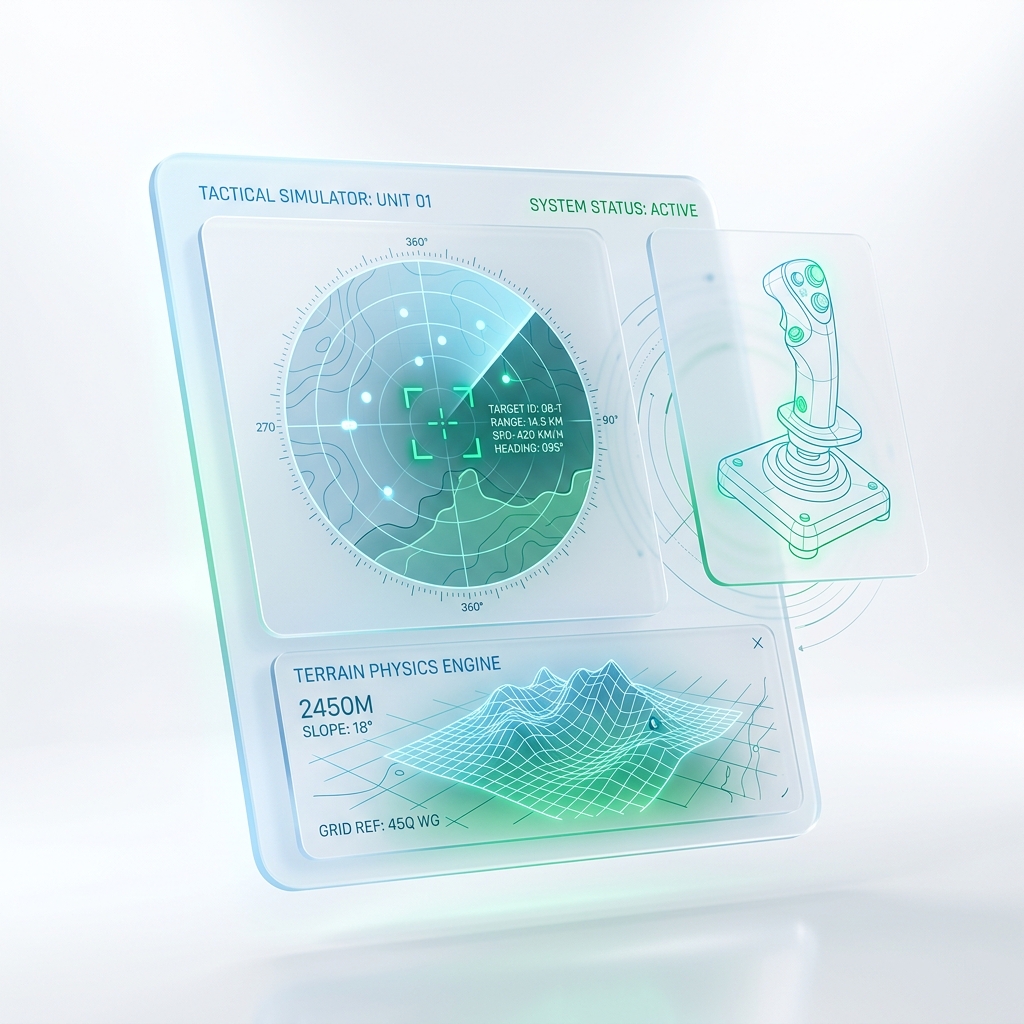
Simulating actual military hardware and environments requires much more than simple 3D graphics rendering. True tactical readiness relies on precise physical feedback, multi-crew hardware synchronization, and variable environmental stressors. Modern simulator booths leverage high-fidelity physics engines to bridge the gap between simulation and tactical reality.
Simulating Dynamic Vehicle Physics
In tactical armored vehicle or anti-tank guided missile simulators, crew performance hinges on vehicle behavior. Real-time physics models translate vehicle weight, track terrain traction, roll angles, and kinetic recoil into instantaneous steering console vibration. This lets drivers and gunners develop the realistic muscle memory required to traverse hostile terrains and align weapon targets confidently.
Structured After-Action Review (AAR)
A simulator's value is multiplied by its evaluation capabilities. Modern training systems log every command input, target acquisition speed, and fire accuracy metric. After the exercise, instructors use AAR software to replay the simulation from multiple perspectives, pinpoint operational vulnerabilities, and issue custom performance scoring immediately.
Deploy Tactical Simulators?
Talk to our simulator engineering group about custom training booth hardware and physics engine mapping.